
7. Observing Crystal Shapes
Goal
To show that different ionic compounds form differently shaped crystals.
Method
Crystal 1: Magnesium Sulfate
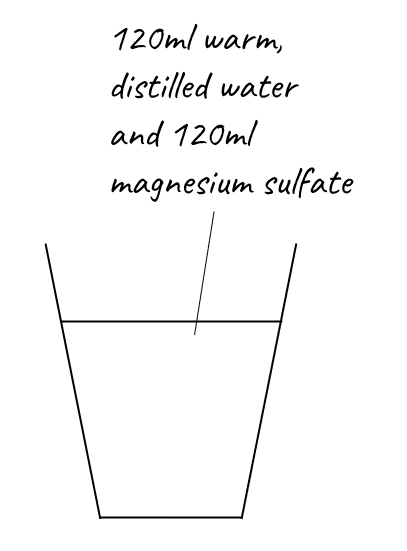
120 ml distilled water was heated to 50°C and poured into a heatproof glass.
120 ml magnesium sulfate was added to the water, and the water stirred until all the magnesium sulfate had dissolved.
The glass was placed in a refrigerator overnight. The contents were then observed.
Diagram
Crystal 2: Potassium Aluminum Sulfate
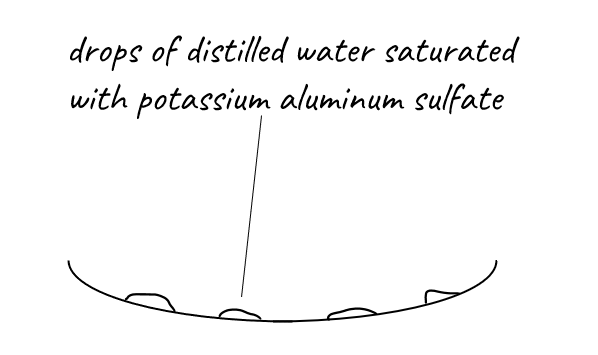
1 tbsp (15 ml) of warmed, distilled water was put in a small beaker. 0.5 tsp potassium aluminum sulfate was added and the beaker swirled. This was repeated until no more potassium aluminum sulfate would dissolve.
Drops of the solution were put onto a petri dish using a small spoon. Care was taken to ensure that no crystals remaining in the water were poured from the beaker.
The water was left to evaporate. The crystals were then observed.
Diagram
Results
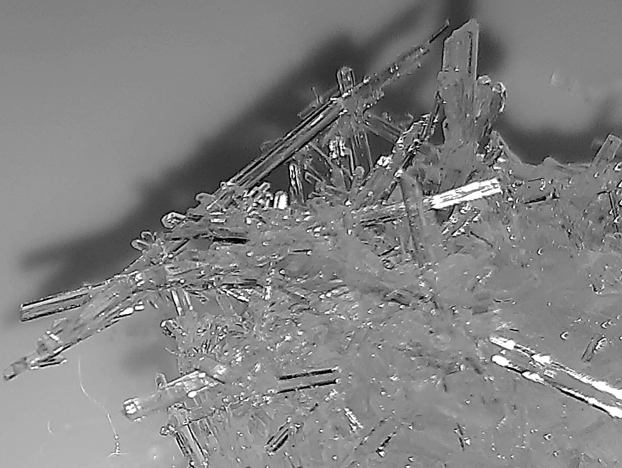
Magnesium sulfate crystals grew in the shape of long, thin needles.
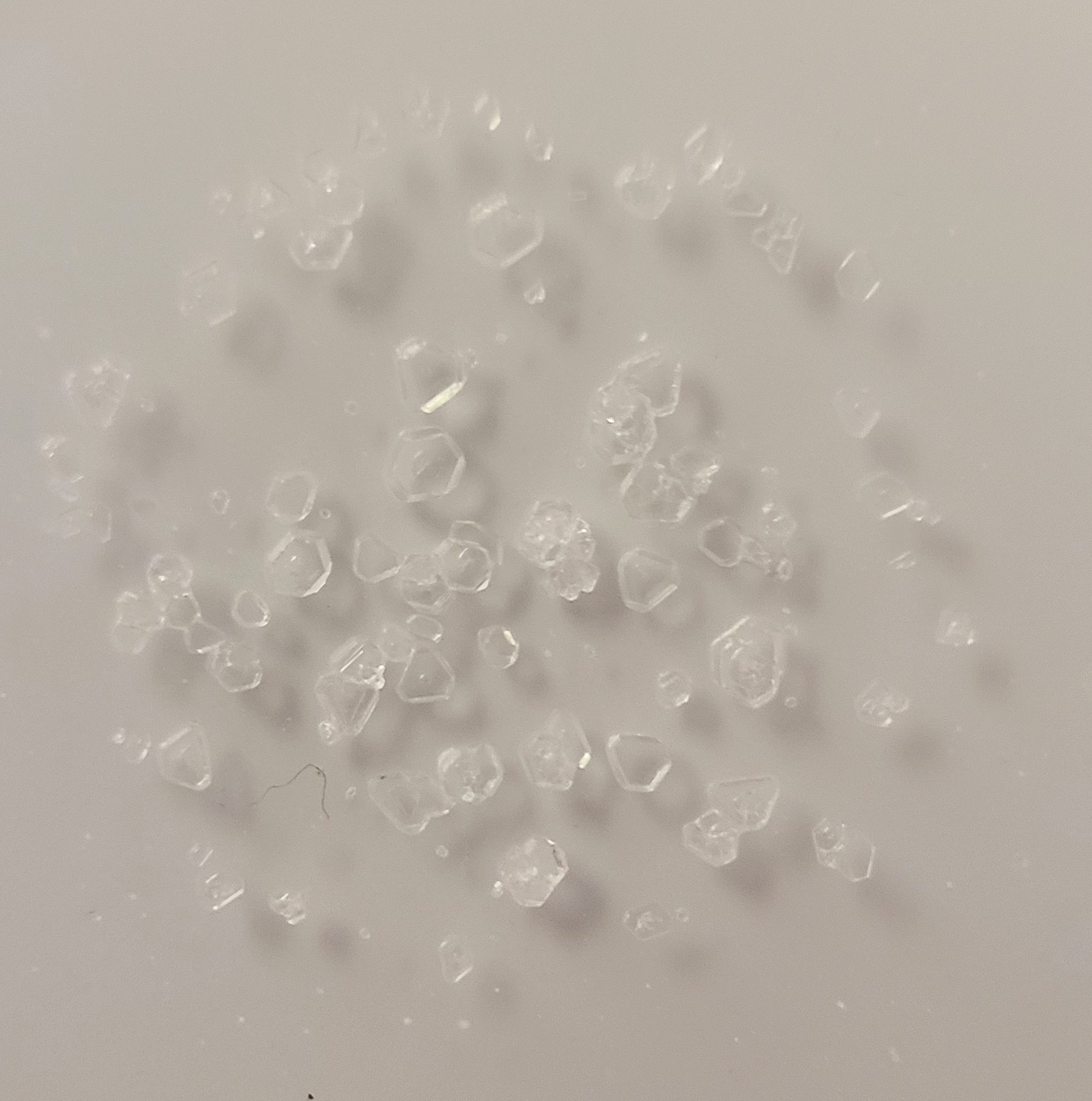
Potassium aluminum sulfate crystals grew in the shape of hexagonal prisms.
Magnesium Sulfate Crystals
Potassium Aluminum Sulfate Crystals
Conclusion
Different crystals form in different shapes. Magnesium sulfate crystals grew like needles, whereas those of potassium aluminum sulfate grew as hexagonal prisms.