
9a. Measuring the pH of Household Substances
Goal
To measure the pH of a diverse range of household substances.
Method
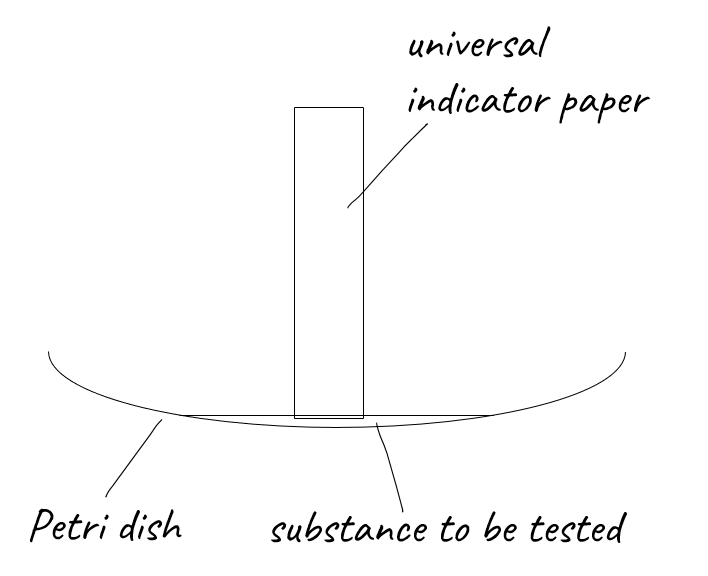
A few drops of the substance to be tested were placed on a petri dish.
A piece of litmus paper was dipped into the substance, and the change of color was used to determine the pH of the substance.
Diagram
Results
| Substance | pH |
|---|---|
| Distilled water | 7 |
| Vinegar | 3 |
| Lemon juice | 2 |
| Milk | 6 |
| Tomato juice | 4 |
| Oven cleaner | 13 |
| Bleach | 12 |
| Limescale remover | 2 |
| Toothpaste | 9 |
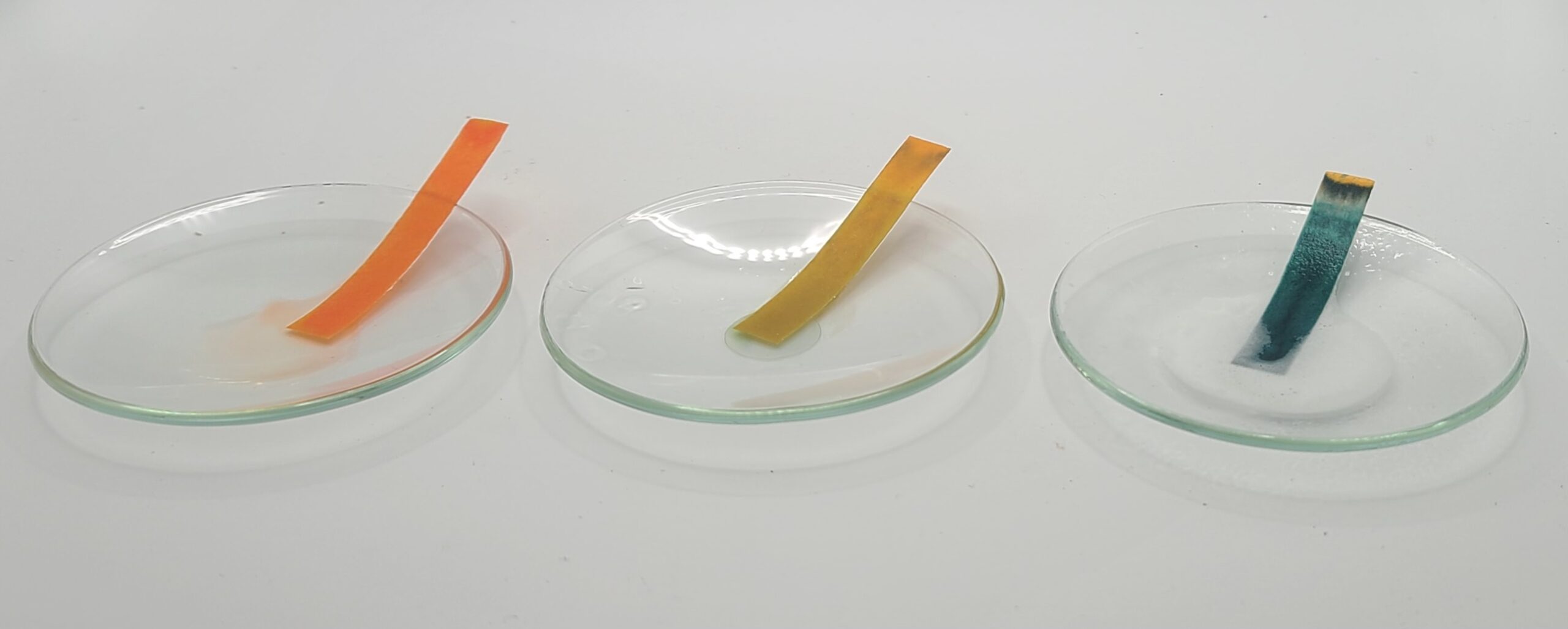
Pieces of litmus paper showing the pH of different household substances:
Conclusion
There is great variety in the pH of household substances. Some are strongly acidic (e.g. lemon juice), some are strongly alkaline (e.g. bleach), and others are neutral (e.g. distilled water).
The lowest pH observed was that of vinegar (pH 2), and the highest that of oven cleaner (pH 13).
Some cleaning materials are acidic (e.g. limescale remover) and others are alkaline (e.g. bleach).